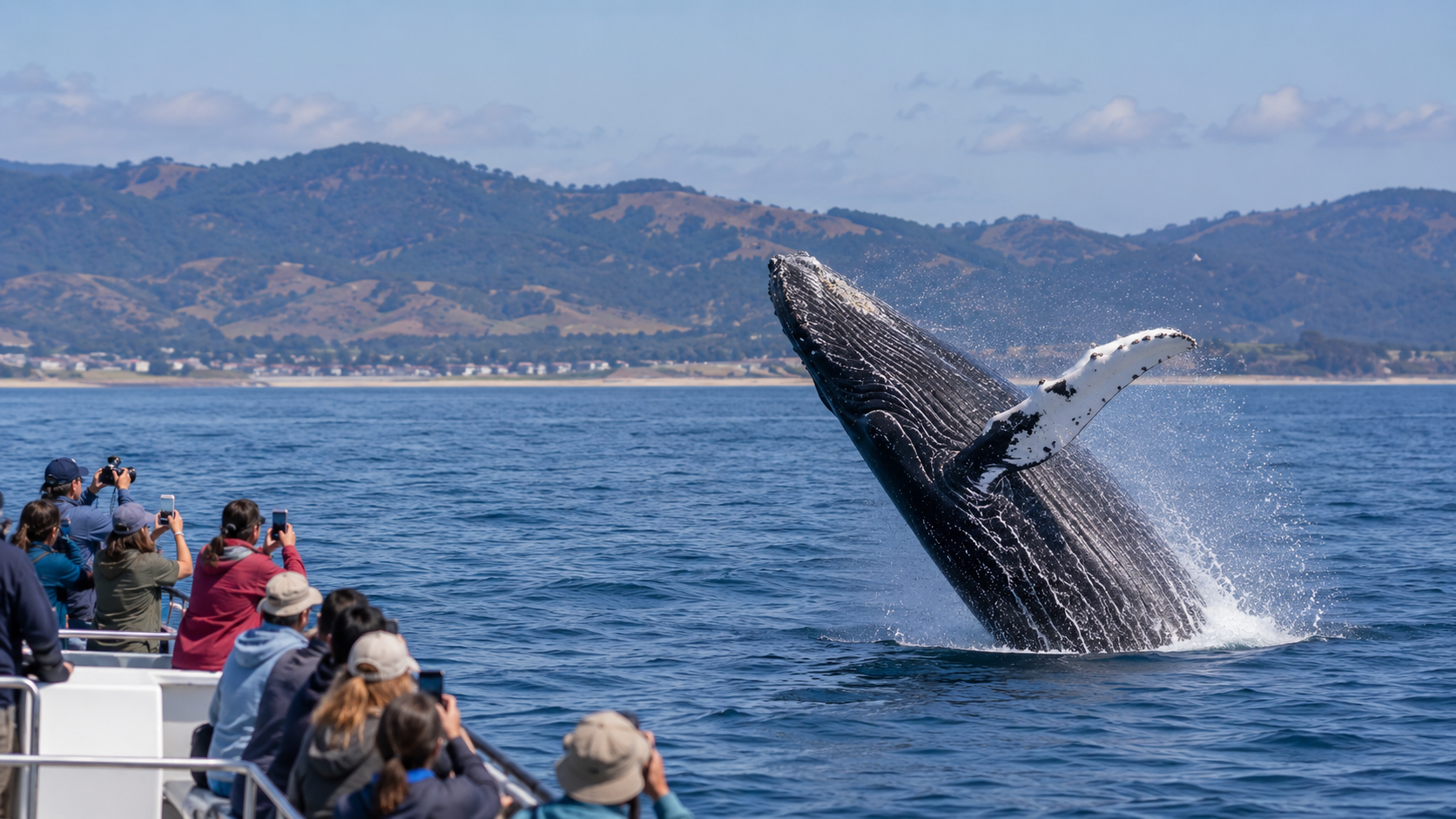
Monterey Bay whale watching is one of the most memorable ways to experience California’s Central Coast. The bay’s deep submarine canyon and productive marine ecosystem bring whales, dolphins, sea lions, seabirds, and other wildlife surprisingly close to shore. Tours operate throughout the year, but the animals you may encounter vary by season, which means every outing has a different character.
Interest is especially high in summer 2026 after remarkable local marine-life encounters. Even so, the animals are wild and sightings cannot be guaranteed. This guide explains when to go, where tours depart, what you may see, and how to prepare.
Why Monterey Bay Is an Exceptional Whale Watching Destination
The Monterey Bay National Marine Sanctuary protects a vast and biologically rich section of the Central California coast. Its underwater landscape includes a canyon that reaches deep water close to shore, while seasonal upwelling brings nutrient-rich water toward the surface. That food web supports krill, anchovies, sardines, squid, and the larger predators that follow them.
Because feeding areas and migration routes overlap here, whales and dolphins can be present in every season. Pacific Grove, Point Pinos, and other overlooks also support shore viewing. Explore more outdoor adventures in Monterey County before or after the tour.
When Is the Best Time for Monterey Bay Whale Watching?
There is no single best month for everyone. The right time depends on the species you hope to see and the kind of experience you prefer.
Spring Through Fall: Humpbacks, Dolphins, and Occasional Blue Whales
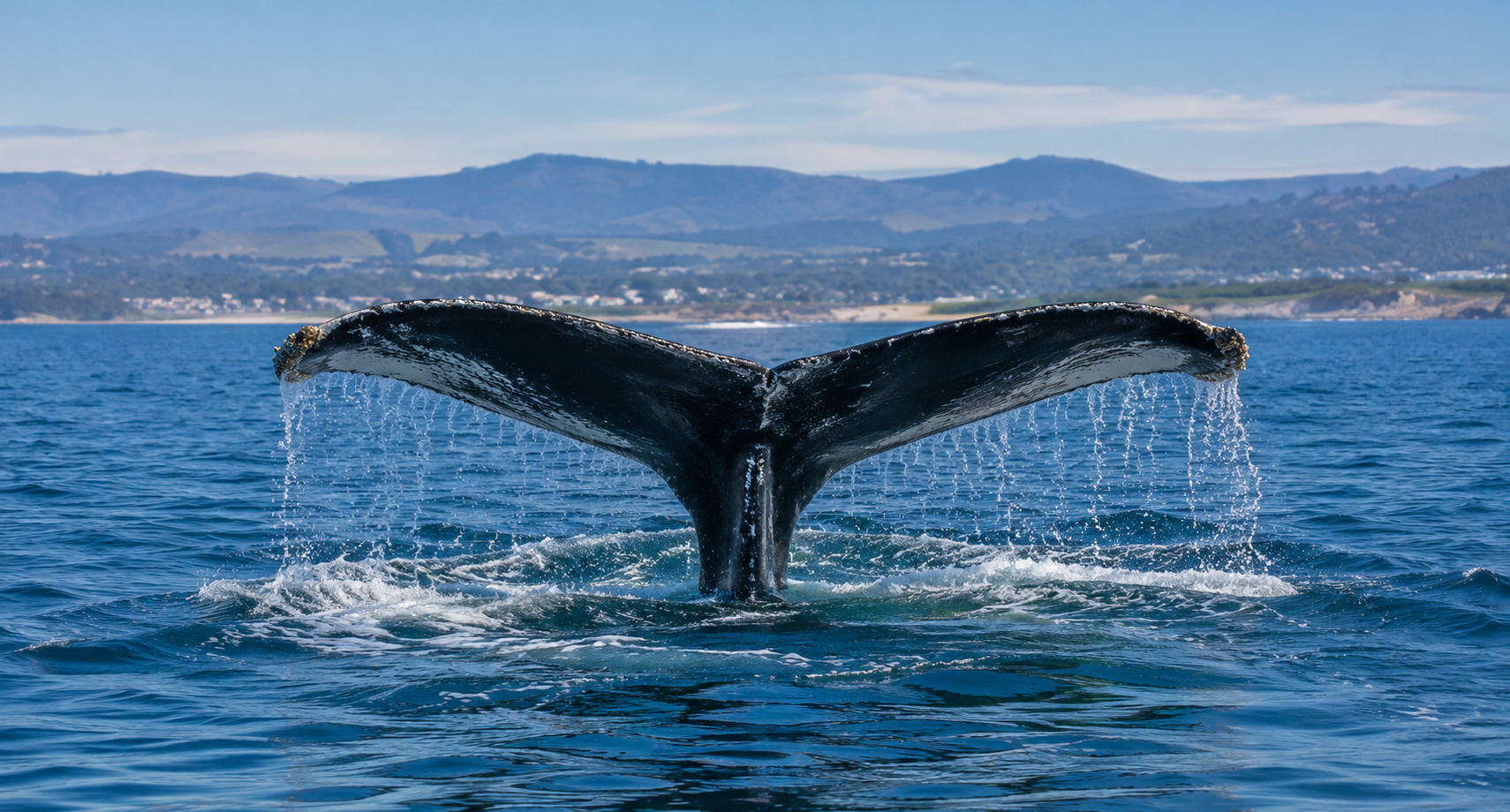
Late spring, summer, and fall are commonly associated with feeding humpback whales. Humpbacks may surface, lunge-feed, slap their tails, or occasionally breach, although no behavior is guaranteed. Summer can also bring blue whales when krill conditions are favorable. The Monterey Bay Aquarium’s blue whale guide explains why these enormous animals visit productive California waters in search of food.
Common, Pacific white-sided, Risso’s, and other dolphins may appear in groups of very different sizes. Orcas also visit Monterey Bay, but their movements are unpredictable. Never book on the assumption that one species will appear.
Winter and Early Spring: Gray Whale Migration
Winter and early spring are known for gray whales traveling along the California coast. Their migration can sometimes be observed from shore because gray whales may pass through relatively shallow coastal water. Boat trips can provide a wider viewing area, while land-based observation is a good option for travelers who prefer to stay
Where Do Monterey Bay Whale Watching Tours Depart?
Most visitors choose between departures from Monterey and Moss Landing.
Monterey: Tours departing from Old Fisherman’s Wharf are convenient for travelers staying near downtown Monterey, Cannery Row, Pacific Grove, or Carmel. The wharf is close to restaurants, shops, and other things to do in Monterey County, making it easy to build a full day around the cruise.
Moss Landing: This harbor sits near the center of the bay and close to the head of the submarine canyon. It is a practical choice for visitors staying in North Monterey County or planning to combine whale watching with Elkhorn Slough. Conditions, routes, and actual wildlife locations vary daily, so neither departure point guarantees better sightings on every trip.
Before booking, compare trip length, vessel size, accessibility, cancellation terms, onboard restrooms, naturalist staffing, and seasickness policies. Current options can be reviewed through the official See Monterey whale watching guide. Individual operators such as Monterey Bay Whale Watch publish schedules and recent observations, while other companies offer departures from both Monterey and Moss Landing.
What You May See on a Tour
A Monterey Bay whale watching trip may include humpback whales, gray whales, blue whales, fin whales, orcas, several dolphin species, sea lions, seals, sea otters, ocean sunfish, sharks, and pelagic seabirds. The combination changes with weather, prey, migrations, and natural animal behavior.
Recent-sighting logs are useful for understanding what has been observed, but they are not promises for a future trip. The latest Monterey Bay marine mammal sightings are updated regularly and can help visitors learn which species have recently been reported.
How to Prepare for the Boat Trip
Conditions on the water can feel much cooler and windier than conditions beside your hotel. Dress in layers and bring a wind-resistant outer layer even when the inland forecast is warm. Closed-toe shoes with good traction are more practical than loose sandals. A brimmed hat, sunglasses with a retainer, and reef-conscious sunscreen can also improve comfort.
If you are prone to motion sickness, ask a medical professional or pharmacist about suitable options before the day of departure. Follow any product directions carefully. On the vessel, staying outside in fresh air, looking toward the horizon, and avoiding heavy meals immediately before departure may help some passengers. Morning trips sometimes offer calmer conditions, but ocean weather is never guaranteed.
Bring binoculars if practical, keep camera gear manageable, use a strap, and protect electronics from spray.
Responsible Whale Watching Matters
Whales and dolphins need room to feed, travel, rest, and care for their young. Responsible operators avoid chasing animals, cutting across their path, surrounding them, or causing them to change their natural behavior. The NOAA whale watching guidelines explain how vessels can reduce disturbance, while the sanctuary’s responsible wildlife viewing guidance applies to encounters from boats, beaches, trails, and other coastal locations.
Never attempt to approach, touch, feed, swim with, or fly a drone close to marine mammals. If you are using a private boat or kayak, learn the applicable rules before leaving shore. Choosing an operator that emphasizes naturalist-led interpretation and responsible viewing supports both a better educational experience and long-term wildlife protection.
Land-Based Whale Watching in Monterey County
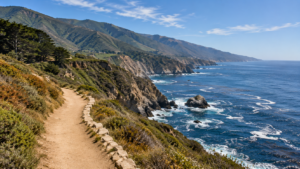
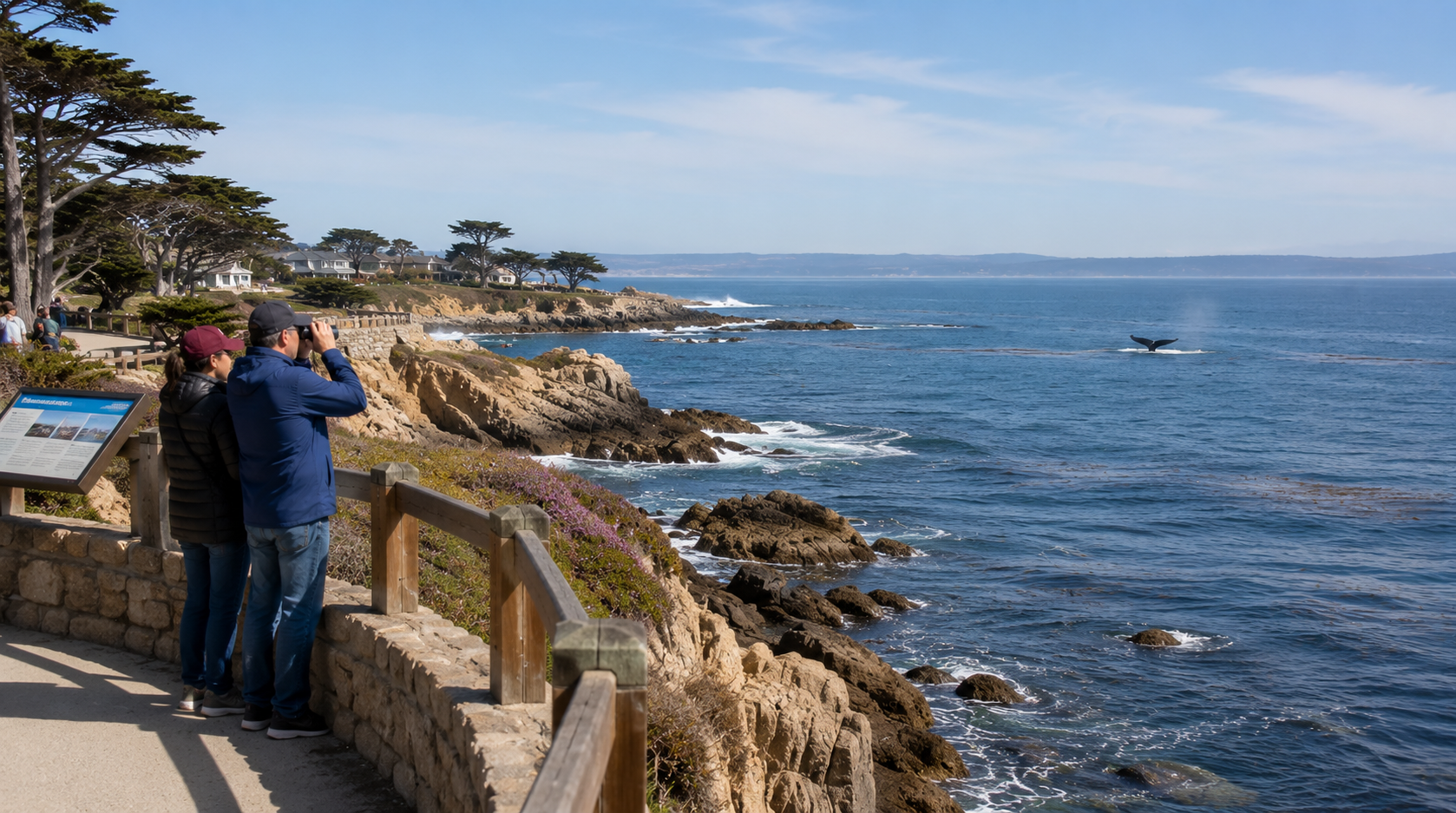
A boat is not the only way to look for whales. Elevated coastal viewpoints around Pacific Grove, Point Lobos, and the Big Sur coast can provide broad views of the migration corridor. Bring binoculars and scan slowly for spouts, dark backs, tail flukes, groups of circling seabirds, or unusual concentrations of boats that are keeping a respectful distance.
Land-based viewing suits travelers with limited time or concerns about seasickness and can be combined with the best summer hikes in Monterey County. Stay behind barriers and away from unstable cliffs.
Plan a Complete Monterey Bay Day
Allow time before departure for parking, check-in, and finding the correct vessel. After the cruise, explore the waterfront, visit Cannery Row, walk part of the coastal recreation trail, or choose a meal from the site’s planned Monterey County food and drink guide. Travelers interested in marine science can also visit the Monterey Bay Aquarium’s sanctuary resources to understand why the bay supports such extraordinary wildlife.
Monterey Bay whale watching is at its best when visitors arrive prepared, remain flexible, and appreciate whatever the ocean reveals. A distant spout, a feeding flock of seabirds, a pod of dolphins, or a whale’s tail disappearing below the surface can become the defining memory of a Central Coast trip.