The western monarch migration is underway, but only a few butterflies have arrived at the sanctuary so far. For current sightings and seasonal counts, check the Pacific Grove Museum of Natural History’s monarch updates before traveling.
The Pacific Grove monarch butterfly season is one of Monterey County’s most remarkable autumn and winter wildlife experiences. Each year, migrating western monarchs seek sheltered coastal groves, where the orange-and-black butterflies rest among eucalyptus, Monterey pine, and cypress trees. The small seaside community is known as “Butterfly Town, U.S.A.,” and its sanctuary offers visitors a chance to observe this extraordinary migration without an admission fee.
Autumn 2026 makes the experience especially timely. Monarchs have begun arriving, local educators are preparing winter programs, and conservationists are monitoring a population that remains dramatically below its historical size. Whether you’re visiting with children, planning a wildlife photography outing, or building a weekend trip around Pacific Grove, here’s how to make a thoughtful visit.
When Is Pacific Grove Monarch Butterfly Season?
Western monarchs usually begin arriving around mid-October and depart in February. The best overall viewing window is November through January, with numbers often highest near the end of November. This timing is a guide, not a guarantee: weather, migration conditions, and population size can all change what visitors see on a particular day.
As of late October 2026, the Pacific Grove Museum’s latest sanctuary notice says the season is just beginning and only a few monarchs are present. Afternoon visitors may notice butterflies moving around nectar beds near the lower section of the sanctuary. If your main goal is watching clusters, consider a return visit in November or December and check for updated reports first.
Where to See Monarch Butterflies in Pacific Grove
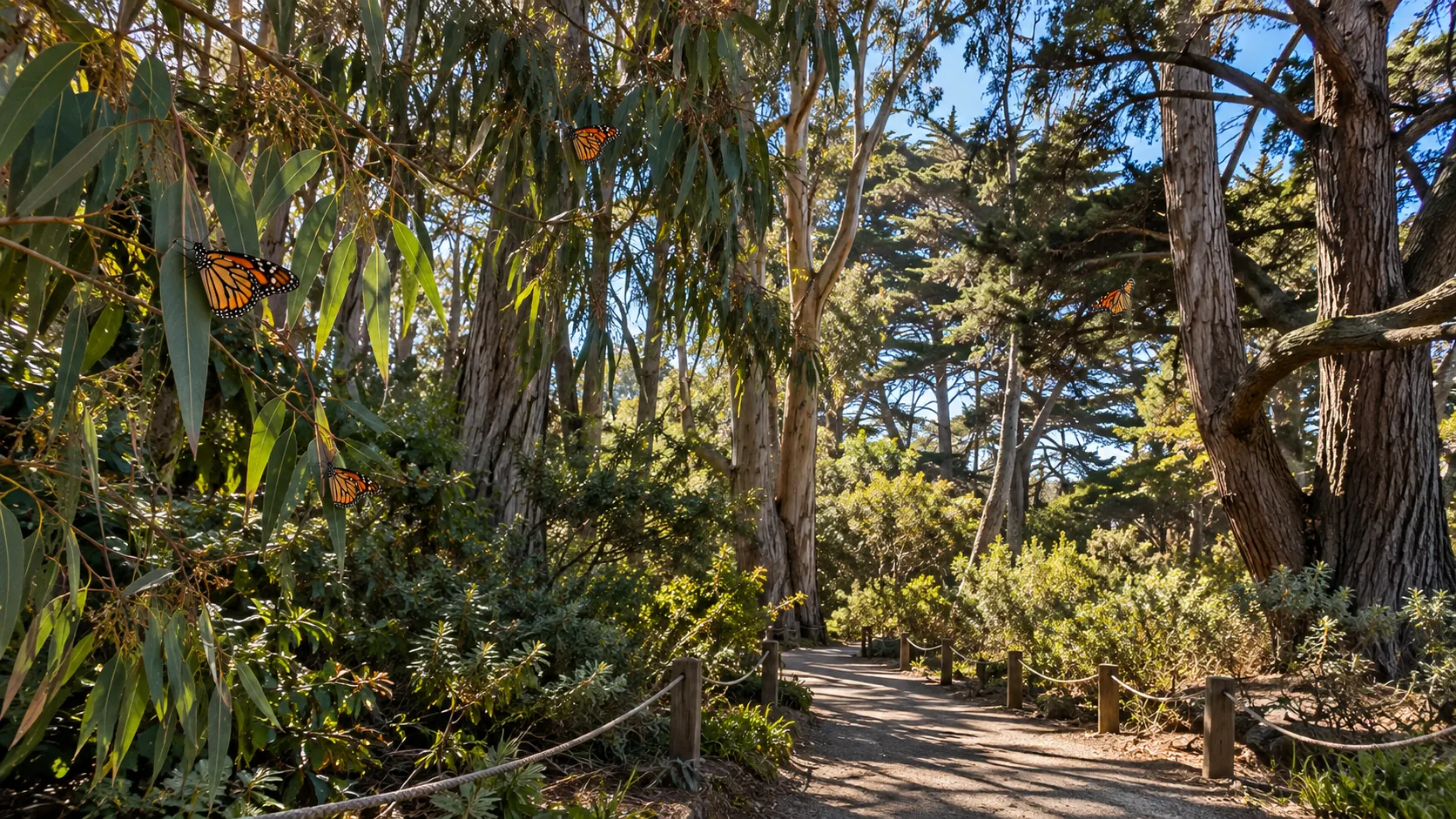
The main destination is the Monarch Grove Sanctuary at 250 Ridge Road, Pacific Grove, CA 93950. It is one of California’s best-known publicly accessible overwintering locations and the largest such site in Monterey County. A short gravel path winds beneath the trees, making this a manageable stop for many visitors rather than an all-day hike.
According to the official See Monterey listing and the museum, the sanctuary has free admission, does not require reservations, and is generally open from sunrise to sunset. Parking is limited and mostly on nearby streets. Its packed-gravel path is described as accessible, although it has a gentle downhill slope. Arrive with enough daylight to look for butterflies quietly and safely.
Pets are not allowed inside the sanctuary. Stay on designated paths, avoid eating or smoking in the grove, and never touch or chase butterflies. The city and museum treat those restrictions seriously because the insects depend on an undisturbed place to survive winter.
What Do Overwintering Monarch Clusters Look Like?
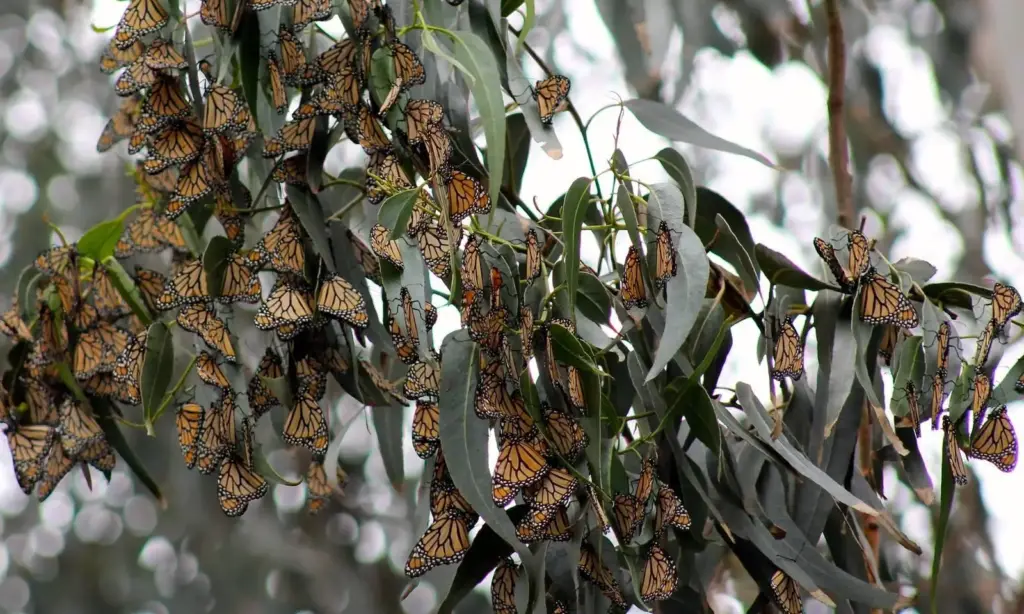
During cooler periods, monarchs hang close together from branches, often with their wings folded. From the ground, a cluster may resemble dry leaves or small pinecones. You might initially walk right past it. As conditions warm, individual monarchs may open their wings, bask in sunlight, or fly to flowers before gathering again later.
Large historical gatherings are spectacular, but do not expect thousands of butterflies in 2026. Population counts fluctuate dramatically, and the sanctuary has experienced very low numbers in recent seasons. Images of dense monarch clusters illustrate how the species behaves, not how many are currently present in Pacific Grove.
Morning Clusters or Afternoon Butterfly Flight?
The best time of day depends on the behavior you want to observe. The museum recommends arriving before 11 a.m. or on cooler, overcast days to look for stationary clusters. On sunny afternoons when temperatures climb above roughly 55°F, active butterflies may become easier to see around the sanctuary’s nectar beds. A warmer day is not automatically a better day for finding resting groups.
Bring binoculars, scan the underside and outer edges of tree branches, and give your eyes time to adjust. Volunteer monarch docents are frequently present from about 11 a.m. to 3 p.m. during the October-to-February season, weather permitting. They can explain where butterflies have been observed without visitors leaving the trail. Check the museum’s current visitor advice because docents and weather conditions vary.
Why Monarchs Travel to Monterey County
Western monarch butterflies spend much of the year in breeding and feeding habitat across the western United States. As the seasons change, a special migratory generation seeks mild, sheltered places to spend the winter along the California coast. The journey is extraordinary because the butterflies that return to an overwintering grove are not necessarily the ones that departed months earlier.
Monarchs need a balance of protection from wind, suitable moisture and temperature, sunlight for activity, and nearby nectar plants for energy. Those conditions help explain why groves along the coast matter so much. The Monterey Regional Monarch Alliance explains the multi-generational migration and the importance of overwintering habitat across the county.
Why the 2026 Monarch Season Matters
The latest completed regional monitoring data show why butterfly watching should be paired with conservation awareness. In January 2026, the Xerces Society reported approximately 12,260 western monarchs across 249 monitored sites during the late-November to early-December 2025 count period. That was the third-lowest tally since standardized monitoring began in 1997.
Pacific Grove’s mid-season count was only 188 monarchs in 2025, although a later local count reached 226. Those numbers should not be confused with the upcoming 2026-27 count, which is still in progress. Declines have been linked to habitat loss, pesticide exposure, changing weather, and stress on breeding and overwintering environments.
The 30th Western Monarch Count is scheduled in three periods: October 17-November 1, 2026; November 14-December 6, 2026; and December 26, 2026-January 10, 2027. The surveys help researchers distinguish a short-term change at one grove from broader regional trends.
How Visitors Can Help Protect Monarch Butterflies
A quiet, respectful visit is one of the simplest ways to support the sanctuary. Keep a comfortable distance, do not collect butterflies or vegetation, avoid flash photography aimed directly at resting clusters, and leave pets outside. Remember that a wintering butterfly may be conserving energy needed for survival and onward migration.
Monarch conservation also extends beyond the grove. The Xerces Society’s western monarch guidance recommends reducing pesticide exposure, protecting overwintering trees, and growing suitable native nectar flowers. In appropriate breeding areas, locally native milkweed helps caterpillars. However, Xerces specifically advises against planting milkweed at California coastal overwintering sites; habitat choices should match the location and stage of the monarch’s life cycle.
Visitors interested in helping more directly can look into museum volunteer opportunities, community science, and other local habitat projects.
Monarch Magic: A Family-Friendly November 2026 Event
If you’re planning a late-November visit, the Pacific Grove Museum of Natural History’s Science Saturday: Monarch Magic! is scheduled for Saturday, November 28, 2026, from 10 a.m. to 3 p.m. The free museum event focuses on monarch life cycles, habitat protection, and other threatened species through family-friendly educational activities.
The museum is at 165 Forest Avenue, separate from the sanctuary at Ridge Road. Check the event listing before your visit in case programming changes. Pairing the two stops can turn a short butterfly-viewing outing into a more meaningful introduction to local ecology.
What Else Can You Do Around Pacific Grove?
Pacific Grove is ideal for a relaxed nature-focused day. After visiting the monarchs, explore the coastal scenery of Asilomar State Beach, where rocky coves, dunes, and a shoreline trail offer dramatic views. You can also walk the nearby Pacific Grove waterfront and enjoy local cafés, shops, or historic neighborhoods.
For more outdoor inspiration, see our Monterey County hiking guide. Nature enthusiasts can also read about Monterey Bay whale watching, while travelers planning an evening activity may enjoy our Monterey County stargazing guide.

A Simple Pacific Grove Butterfly Day Itinerary
Morning: Start at the Monarch Grove Sanctuary to look for resting clusters. Bring binoculars, move quietly, and read the interpretive signs. Late morning: Stop by the Pacific Grove Museum of Natural History to learn about regional wildlife. Afternoon: Walk along Asilomar’s coastal trail, explore the town’s shops, or enjoy lunch from a local business. If weather is sunny and you are nearby later, a second short sanctuary stop may offer a chance to see butterflies in flight.
Allow flexibility: coastal fog, wind, rain, or unexpectedly low butterfly activity may change the experience. The best trip is one that appreciates the habitat rather than treating a large butterfly count as a guarantee.
Frequently Asked Questions
Is the Pacific Grove Monarch Sanctuary free?
Yes. There is no admission fee and reservations are not normally needed. The sanctuary is generally open from sunrise to sunset, subject to extreme-weather restrictions.
Can I bring my dog?
No. Pets are not permitted inside the monarch sanctuary, even on leash.
Will I see thousands of butterflies in October 2026?
No such sighting can be promised. Only a few monarchs have been reported so far, and the recent regional population remains very low. Check the museum for up-to-date observations.
Make Your Monarch Visit Count
The Pacific Grove monarch butterfly season offers more than a photogenic encounter. It is an opportunity to see a remarkable migration, learn why protected coastal groves matter, and support careful stewardship of Monterey County’s wildlife. Plan around the latest reports, keep your expectations realistic, and enjoy this small but extraordinary seasonal arrival.